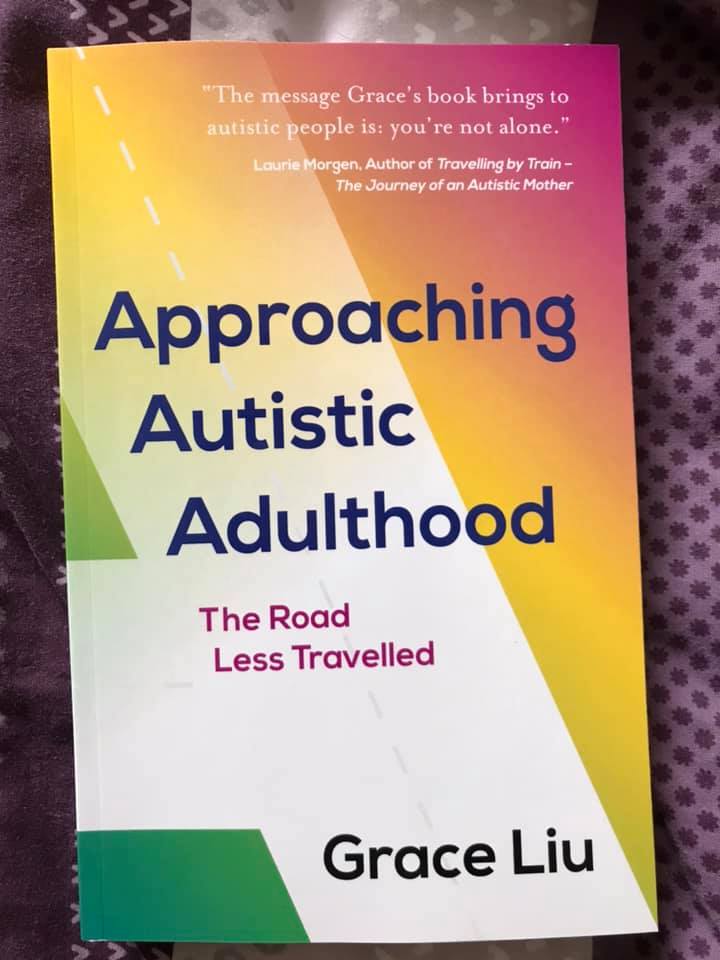
Approaching Autistic Adulthood: The Road Less Travelled
Publisher
Release Date
13th October 2021
Summary
Being an autistic adult is hard. You have to be brave enough to get by in a society that’s hell bent on fixing you, strong enough to pursue your goals despite the additional challenges, and patient enough with neurotypicals who just don’t get it. Where do you start?
Approaching Autistic Adulthood is a clear, informal guide for young autistic people trying to make sense of independent adult life. Topics include explaining autism, overload, friendships, romance/sexuality, education, work, bullying and intersectionality. As well as my own anecdotes and advice, I have also included quotes from other autistic adults. The aim of this book is to balance out all the neurotypical-led autism resources with an insider’s perspective of what autism really means.
Testimonials
“It’s best to learn from autistic adults. Grace’s book shows there’s always more to learn about autism and yourself!” – Thomas Henley, host of the Thoughty Auti podcast.
“The message Grace’s book brings to autistic people is: you’re not alone.” – Laurie Morgen, author of Travelling by Train – The Journey of an Autistic Mother.
“Grace’s authentic writing reminds us that experiences that sometimes feel alienating are what make us beautiful and unique.” – James Pratt, host of the Silent Superheroes podcast.
You can watch my Facebook Q and A video here.
Available via: Amazon, Waterstones (UK), WH Smith (UK)
Wherever you buy my book, please leave an Amazon review to boost its online circulation. I have been advised by my publishers to aim for 100+ for maximum visibility, so keep them coming!
FAQs
Who is Approaching Autistic Adulthood aimed at? First and foremost, this book is aimed at autistic adults aspiring towards – or getting used to – an independent adult life. I say this as a now 30+ year-old still figuring out where I want to go in life! However, there is plenty to enjoy for autistic adults who simply want something relatable to read, as well as neurotypical allies hoping to learn about autism from the inside.
What inspired you to write the book? I had wanted to write a book about autism ever since I was a teenager and becoming more comfortable talking openly about autism. As I grew up and started exploring my autistic identity, I began to notice more and more that most autism related resources and stories were written by and for non-autistic people. It felt like they were talking about people like me rather than to us, and I cannot emphasise strongly enough how important it is to learn from and promote what autistic people are saying.
Would you ever write a follow-up? Good question! I did make a start on writing a book about being an autistic child, aimed at parents. However, I found it harder to get into than Approaching Autistic Adulthood, and then I got a full-time job, which left little time for writing. But who knows – maybe a project for the future?
How much of the book relates to your life? Much of the book is inspired by my own experiences and there are plenty of personal anecdotes in there. However, to expand the perspective from which it is written, I have also included quotes and anecdotes from other autistic adults who have shared with me their trials and tribulations of adult life in a neurotypical world.
What is your favourite part? I would say Chapter 2: Overload. I think for me this was the easiest topic I’ve covered in my book and also the one I’ve discussed the most in my blog. Unlike the sections on education and work, it didn’t require extensive research on neurotypical-created systems and regulations (something I know little about) – just writing from the heart what I want people to understand.
Were there any parts you struggled to write? As mentioned above, I had trouble with areas that required knowledge of systems, regulations and resources relating to work and education. I also struggled a bit with Chapter 4 – Romance, Dating and Sexuality. To this day, I still have very little experience with romantic love, and I don’t feel comfortable talking about any experience I do have. So it was hard finding much to write about in this area!
Where can I buy a copy? Approaching Autistic Adulthood can be found on Amazon, including outside the UK. Within the UK, it can be ordered through popular bookshops such as Waterstones or WH Smith. You can also buy a copy directly from me – simply drop me a message or an email and I will post you a copy, along with a personal message and one of my business cards.
How do I know if this book is right for me? Well, as with every book, Approaching Autistic Adulthood won’t be for everyone. The narrative of this book is very much neurodiversity-centred – that is, upholding neurodivergent voices and challenging neurotypical supremacy. So, if you are after resources on autism from the perspective of a non-autistic caregiver or professional, then this book will not be what you are looking for.
However, as stated before, I am a firm believer about centering autistic-led resources when talking and learning about autism. Therefore, if you are an autistic person wanting to feel seen – or a non-autistic person willing to challenge your own preconceptions – then this book could be the perfect purchase for you. You might even want to share it with your friends, family or colleagues – after all, the more autism understanding there is, the better!
 Artistic Autistic Grace